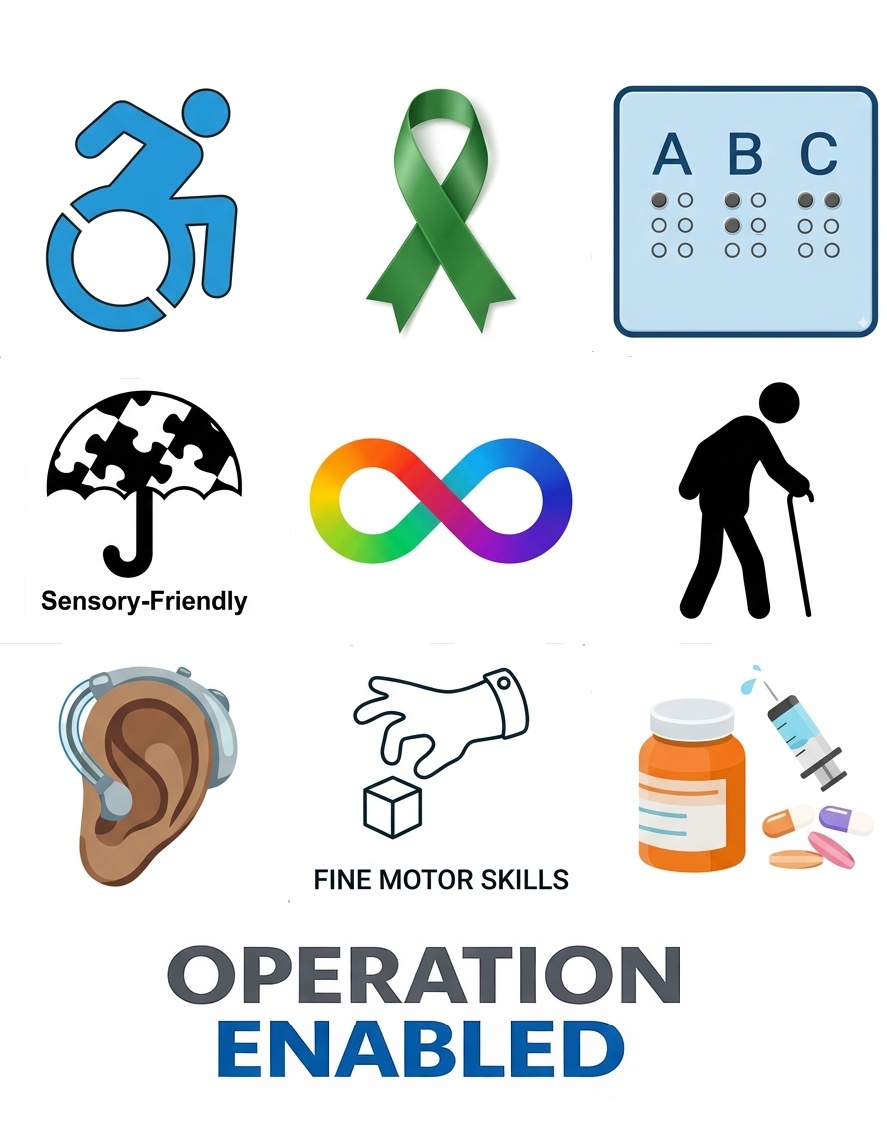
Accessibility is not a peripheral issue. It is a structural condition affecting participation across every domain of public life.
We envision a world in which systems are designed from the outset to ensure uninterrupted safety, access, and participation for all individuals, including those with disabilities. In such a world, access is not contingent on documentation, delay, or discretionary approval, and no person is required to negotiate for their own survival.
This vision requires more than inclusion; it requires structural correction. Longstanding barriers – physical, technological, regulatory, and cultural – must be systematically removed, and the harms caused by their persistence must be addressed through meaningful, enforceable change.
In a society informed by the lived experience of disability, policies would prioritize continuity of care, sensory safety, functional access, and human dignity as baseline conditions. Systems that fail to meet these standards would be redesigned or replaced.
This is not a reversal of hierarchy, but the elimination of exclusion as a governing principle. The goal is a world in which safe, equal participation is guaranteed – not contingent.